
The rising tide of land prices in Counties Armagh and Down: from £2,000 to £30,000 per acre
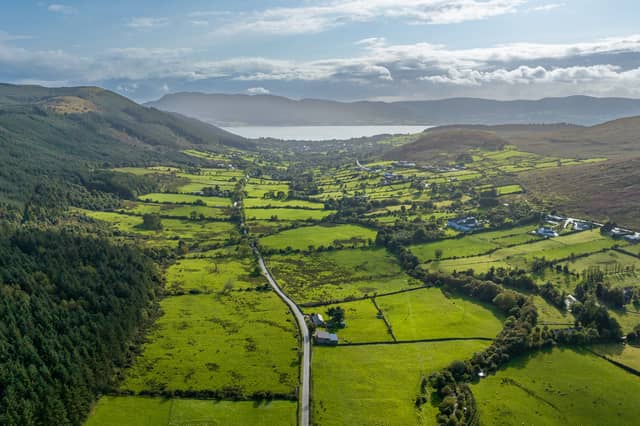

Land Auctioneer Garry Best reflects on price hikes that have seen the cost of land increase by 1,400%.
Only three years ago, I wrote an article for Farming Life regarding the dramatic rise in land prices. I noted that in Counties Armagh and Down, values had climbed from £2,000 per acre in the early 1980s to £20,000 per acre 40 years later.
While these weren't average prices at the time, we began seeing smallholdings of under 30 acres break the £20,000 barrier, starting in Mulladry, Portadown, during the summer of 2021.
By September that year, a 10-acre holding outside Newry reached £24,500 per acre, and by Christmas, a nine-acre plot offered by a New York-based client shattered the £30,000 per acre mark.
The upward trend continued through 2022, primarily among farms of less than 30 acres. However, larger holdings soon followed suit:
- Late 2022: An 80-acre farm in Armagh reached £25,000 per acre.
- Late 2023: A similar-sized farm in Rathfriland broke the £26,000 per acre barrier.
Average land prices in Armagh and Down (2021–2025)
While the headlines focused on record-breaking sales, the broader market averages moved steadily upward on the average price per acre:
2021 - £14,566
2022 - £18,429
2023 - £17,585
2024 - £20,000
2025 - £21,000
Note: These figures reflect agricultural value only. Where a residence or farmyard was included, the figures have been adjusted to show land-only values.
The power of ‘hope land’
A significant influence on average prices is "hope land". This refers to land adjacent to or inside a development zone that may have restrictions, such as being a Local Landscape Policy Area (LLPA). While an LLPA designation requires sensitive design and doesn't forbid development entirely, it adds a layer of protection to the landscape.
Recent sales highlight the premium buyers will pay for this potential:
- South Newry: 12 acres on the edge of the Development Zone sold for £46,000 per acre.
- Newry Bypass: A nine-acre lot with a residence attracted 17 bidders. It sold as one lot, with the land alone reaching £50,000 per acre (valuing the dwelling at approximately £250,000).
- Carnbane (LLPA): A 16-acre holding including a former farmhouse saw 11 bidders. Excluding the yard and house, the land reached £50,000 per acre.
In contrast, a 16-acre holding in Armagh with restricted access and no road frontage fetched only £19,000 per acre. This disparity confirms that for many investors, buying for future generations and long-term potential remains the top priority.
Legacy and long-term appreciation
In February, I was reminded of the deep roots our firm has in this community through two separate stories involving my father and grandfather.
The £12,000 handshake
While discussing a 10-acre smallholding in Dromore, the owner recalled the relationship between our fathers. In the 1970s, my father, Don, was asked by a cattle dealer to bid on a farmhouse with 10 acres. The dealer didn't want to go over £11,000. The next morning, Don called to say he had secured it for £12,000. Though it seemed like a massive sum then, the property - now with a building site - would likely fetch 60 to 65 times that amount in today’s market.
The £500-a-month gain
Another family in Tandragee remembered my grandfather, Jack Best, calling in May 1958 to confirm they had successfully purchased a 30-acre farm for £2,500. From the day of purchase until now, that family has benefited from roughly £500 per month in capital appreciation, regardless of how they chose to farm the land.
Whether it is ‘hope value’ or pure agricultural utility, these historical examples of appreciation continue to be the primary drivers for buyers today when deciding whether or not to make that final bid.
To find out more, visit the Best Property Services website.