
Dairy Council insight: Balmoral Show is the shop window for farming and food in Northern Ireland
Balmoral Show provides a tremendous opportunity for Northern Ireland’s agri-food industry to take stock of the twelve months since last year’s event and to look ahead to what the remainder of 2026 may hold.
It is a unique event, attracting representatives from across all relevant stakeholder groups, including farmers, food processors, retailers, input suppliers, service providers, politicians and key decision makers from every part of society.
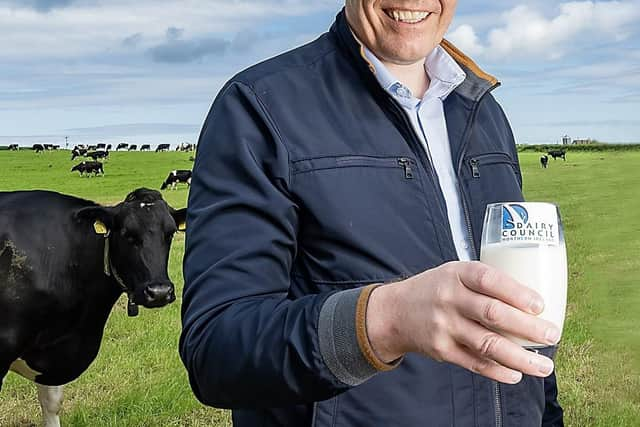

Of course, it also draws the general public in their thousands, who see the four days of Balmoral as a wonderful opportunity to learn more about the agriculture industry and how their local food is produced.
Taken together, these strands create a space where people can come together, reflect on recent developments and plan for the future. Northern Ireland’s dairy sector will be very much at the heart of this with milk processors having a high-profile trade stand presence and farmers keenly seeking information and advice on how best to position their businesses for the years ahead.
The timing of Balmoral Show has always been significant. Farmers traditionally regard the event as marking the beginning of a new season, one that is characterised by growth, in every sense, combining hope and expectation with an appropriate degree of caution. No doubt, this will always be the case.
Balmoral Show 2026 takes place at a time when so many issues of direct consequence to farming and food are under intense pressure with a range of strategic challenges likely to shape the sector’s future direction.
In dairy, international markets have softened considerably in recent months. Higher-than-expected levels of global milk output have weakened market returns, with farm gate prices impacted accordingly.
However, the elephant in the room is the ongoing conflict in the Persian Gulf and its severe impact on fuel, fertiliser and many other farm input costs.
Against this backdrop, a critical question emerges: how do we protect the future of a farming and food sector that contributes £7.3 billion annually to Northern Ireland’s economy.
Of equal importance is the fact that farming and food directly and indirectly support 109,000 jobs, helping to sustain rural communities across the province. These figures form the cornerstone of a recent economic impact assessment produced by the Northern Ireland Food and Drink Association (NIFDA). The Dairy Council commends NIFDA for highlighting that effective industry delivery is enabled in practice through stable objectives, flexible pathways and predictable planning processes.
Meanwhile, Northern Ireland accounts for one sixth of the dairy output generated across the UK.
This is an extremely significant contribution, reaffirming the central role played by local farmers and processors in delivering safe, high quality, nutritious and affordable food for millions of people. With food security rising steadily up the political agenda at Westminster, the potential for agriculture in Northern Ireland to deliver even more in this regard must not be overlooked.
The reality is that farming and food have developed an increasingly interconnected footprint across these islands. Developments in Northern Ireland are closely linked with those in GB and RoI and vice versa.
Approximately, 30% of the milk produced in Northern Ireland is transported south of the border each year for processing. In this context, the trading relationship between the UK and the European Union is critically important. The Dairy Council has consistently highlighted the value of securing an ambitious UK-EU SPS agreement in the months ahead.
Add in the myriad north-south and east-west investments within the processing sector that have taken place over recent years, it becomes clear just how cohesive the farming and food industries across the UK and Ireland have become.
This is a good news story, with ample evidence of its impact on the ground here in Northern Ireland on display at Balmoral Show 2026.
Farming, however, is about much more than food production alone. In recent years agriculture has been at the forefront of two major environmental challenges affecting society as a whole: our response to climate change and the need to improve water quality.
Farmers rightly point out that they are very much part of the solution, to both. But this assertion comes with the proviso that they are properly recognised and rewarded for the full range of goods they deliver for public benefit. This places a strong emphasis on getting the regulatory environment right.
One of the most positive aspects of the Balmoral Show is that so many of the stakeholder organisations involved in these decision-making processes will have a formal presence at the event.
Moreover, these organisations will be hosting events and receptions at the show, aimed at sharing their perspectives on investment opportunities and policy development issues likely to shape farming and food during the period ahead.
These forums present excellent opportunities for those committed to seeing the sector flourish to influence the key debates around our industry’s competitiveness, environmental performance and sustainable growth pathway. It is through engagement of this nature that future strategic policy and investment decisions can most effectively be shaped.
Balmoral is also an important promotional platform for showcasing new technologies capable of enabling our farming sectors to produce the raw material society needs in increasingly sustainable ways.
New science and technology are central to the future of agriculture and it’s vital that innovation is supported to realise its full potential for the benefit of society as a whole.
So, yes, Balmoral Show is a tremendous shop window for farming and food. More than that, it is fast becoming a strategic venue where meaningful debates and discussions about the future can take place.
It is projected that over 100,000 people will take in the sights and sounds of Balmoral Show 2026. In turn, this generates a press and media interest in farming and food that cannot be replicated at any other time of the year.
Consumers are extremely interested in knowing more about the food they eat and how it is produced.
Balmoral Show provides a multitude of insights for members of the general public, where this fundamentally important issue is concerned.
Long may this continue.