
Organic farming sector urges DAERA to secure its future
Northern Ireland's organic farming sector risks being left behind without renewed government support, as farmers and industry representatives call for urgent action to secure its future.
The Nature Friendly Farming Network Northern Ireland (NFFN NI), alongside the Soil Association, the Landworkers' Alliance and farmers from across the country, has joined forces to call on DAERA Minister Andrew Muir to reinstate financial support and invest in the development of the organic sector.
An open letter to the minister highlights concerns over the lack of financial assistance, training opportunities and practical support for organic farmers, warning that Northern Ireland is falling further behind other parts of the UK and Ireland.
The call follows a meeting at Helen's Bay Organic in County Down, attended by around 38 established organic producers and farmers considering conversion.
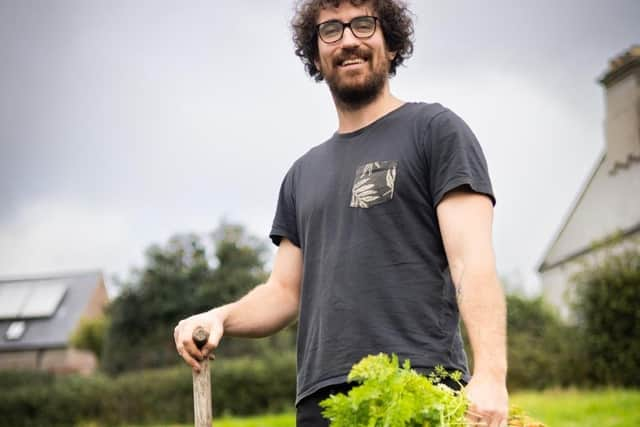

A key concern is the loss of financial support following the closure, in 2022, of the Organic Farming Conversion and Management Measures, which formed part of the Environmental Farming Scheme (EFS).
The scheme previously provided payments to farmers during the two-year conversion period, as well as ongoing support for maintaining organic farming systems.
However, with existing agreements gradually coming to an end, farmers face losing financial assistance, while those wishing to convert from conventional systems will have no dedicated support.
Cormac Dolan, NFFN NI manager, said: "The big concern is that there’s nothing for new entrants. There's no conversion support for somebody wanting to be organic, and then the ongoing payments for those who have been involved are being dropped.”
He believes Northern Ireland is increasingly falling behind other parts of the UK and the Republic of Ireland, where there are ambitions to grow organic production.
The Westminster Government recently published an Organic Action Plan for England, aiming to increase organic farmland from 3.4% to 10% over the next decade, while support measures are also in place in Scotland and Wales.
Cormac said: "There was support in Northern Ireland historically, and if you look across the water and down south, or any of the other jurisdictions, there is support and actually ambition to increase the amount of organic production that's happening. Whereas we are going the other way in Northern Ireland and have completely dropped it."
He warned that the lack of support could also affect the availability of locally produced organic food, with consumers often having to rely on imports, particularly for horticultural produce.
The open letter sets out four main demands: reinstating financial support for conversion and ongoing management, investing in equipment and infrastructure, strengthening education and training, and developing local markets through greater promotion and institutional support.
Cormac said the immediate priority was to reinstate the support previously available, while also improving opportunities for knowledge exchange and training. He highlighted the need for greater investment in organic farming education through CAFRE, which previously included an organic farming element in its training but now offers little for new entrants or farmers considering changing their systems. There is also a need for capital support to help farmers purchase suitable equipment and make the initial investments required when converting.
However, financial support is not the only barrier, with practical and logistical challenges also affecting organic producers. One example is the lack of organic lamb processing facilities in Northern Ireland, leaving producers without a local route to the organic market.
Cormac also highlighted certification difficulties surrounding organic poultry feed brought in from England. One farmer attending the meeting had invested in infrastructure to produce their own poultry feed by mixing raw materials on site. However, despite the materials being organic, bringing them across to Northern Ireland means they lose their organic certification, creating difficulties for the producer in maintaining the organic status of their eggs.
For farmers considering conversion, the initial cost of changing their systems can also be a significant obstacle.
Cormac explained that livestock farmers may need to invest in establishing multi-species swards, while arable producers could require different machinery to adapt their production methods.
He said: "With anything where you're changing your system and trying to wean yourself off external inputs, such as artificial fertiliser, there are going to be teething problems.
"There's a cost to establishing new systems, and that initial process costs money."
Despite these challenges, Cormac believes organic farming can help address some of agriculture's biggest challenges, including soil health, biodiversity, climate resilience and food security.
By reducing reliance on synthetic pesticides and other external inputs, organic systems can improve soil health and support more sustainable farming practices.
Healthier soils can also improve soil permeability, helping to reduce flood risks and support better growth during periods of heavy rainfall and drought, while reduced chemical inputs can benefit pollinators and wider biodiversity.
Cormac said: "Food and farming face major threats from the climate crisis and the loss of nature and biodiversity.
"We need to recognise that organic agriculture offers affordable, practical solutions that support farm resilience and viability, while also providing people with high-quality, nutrient-dense food."
He believes Northern Ireland farmers could also benefit from the growing international organic market if the necessary support and infrastructure were provided.
The meeting at Helen's Bay Organic demonstrated the breadth of interest across the industry, with around 38 farmers representing horticulture, mushroom, egg, beef, sheep and arable enterprises, including established organic producers and those considering conversion.
Cormac pointed to one farmer who received conversion support more than 20 years ago and has since established a profitable system, with improvements in soil and animal health. One farmer involved in the network had received support to convert more than 20 years ago and has since established a profitable system, with improvements in soil and animal health.
The group has offered to meet with Minister Muir and DAERA officials to discuss its proposals further, stressing the need for a long-term approach that gives farmers the financial certainty and practical assistance to develop their businesses.
For Cormac, the immediate priority is ensuring that organic farming support is carried forward into future agricultural schemes, rather than allowing existing provision to disappear altogether.
He warned that delays could leave farmers facing a prolonged period of uncertainty, particularly with further decisions at Stormont potentially being pushed back.
"The first thing I'd like to see happen next is a carryover of the bolt on the EFS hat. So farm with nature, just having organic support within it. And then we can start to work on all the other aspects." he said.
"Action is needed now. If we delay it, it's going to be delayed potentially for a year or more, and that will mean a funding cliff edge for farmers who are involved.
"Biodiversity can't wait."