
Crumlin YFC’s Andrew Reid embark on a life-changing study tour of southern Alberta

At the end of June, club member Andrew Reid travelled to Canada with a group of 25 other members of the YFCU to embark on a life-changing study tour of southern Alberta.
The group was made up of like-minded individuals who were keen to learn more about agricultural systems beyond Northern Ireland.
On arrival in Canada, the group travelled to the scenic town of Banff, where we spent two days sightseeing and observing the local wildlife.
After two days in Banff, the group left the town and headed into the countryside to begin our farm visits. Over the two-week duration of the trip, Andrew and the other members experienced a wide range of different farming systems and learned how beef and dairy production is managed on a large scale.
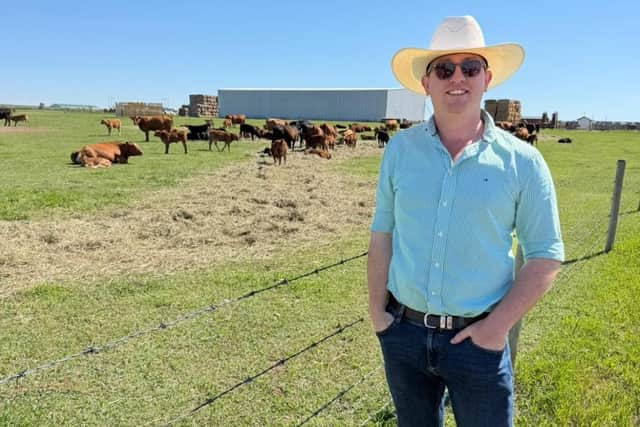

Andrew remarked: “Due to Canada’s varying weather conditions throughout the year, it became apparent just how challenging farming life can be. Temperatures in winter can fall to -40°C, while summer temperatures can reach highs of over 30°C. This demonstrates the severe temperature variations Canadian farmers face throughout the year.
“The first farm we visited was a commercial feedlot, where cattle were bought from the market and fed throughout the winter in large outdoor enclosures. The cattle were fed daily on rations consisting of whole-crop silage and crimped grain. The farm had a maximum carrying capacity of 25,000 head at any one time, with a throughput of approximately 40,000 cattle per year for slaughter. “There was a strong emphasis on performance recording and monitoring cattle health. Like a real-life Yellowstone, horseback cowboys were employed daily to check the cattle for any signs of ill health. The tour offered us a fantastic insight into large-scale cattle production and the level of management required to operate a unit of this size.
“We also visited a number of suckler cow and calf operations, where a more extensive approach to farming was taken. This allowed us to see different grazing systems and stocking densities, with a strong emphasis placed on grazing management and how different species of grasses and plants are utilised to feed cattle through the hottest and coldest months of the year.
“The nature of these operations was very different from standard farming systems in Northern Ireland. One farm we visited had 350 cows spread across 3,500 acres, highlighting the vast scale of some Canadian farming enterprises.”
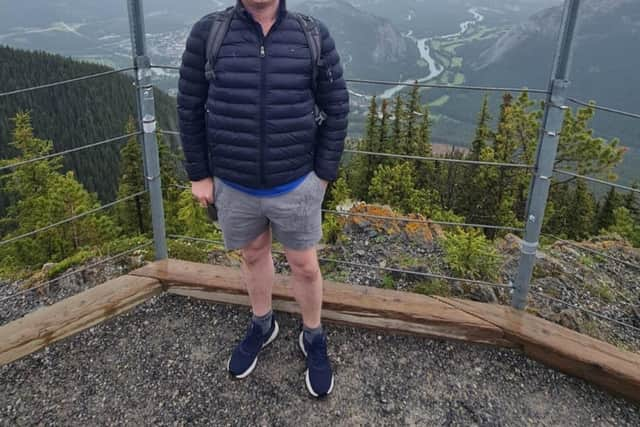
Andrew continued: “As well as beef operations, we also travelled through vast areas of arable land to the east of the Rocky Mountains. This prairie-type landscape offered wonderful views of arable crops stretching as far as the eye could see.
“One of the farms we visited in this area grew a wide range of crops, which were harvested, processed and dried before being baled into compressed bales for export to farming communities in China, Japan and the Middle East.
“This concept seemed so far removed from our traditional Northern Irish approach of growing crops primarily for winter feeding. Nevertheless, the tour allowed us to see and experience different outlets and markets for agricultural crops.
“Further to the farm tours, we also had the opportunity to visit two rodeos. The first was a smaller more traditional rodeo in Ponoka, before finishing the trip at the renowned Calgary Stampede. The atmosphere at these events and the sense of pride, passion and community spirit was very clear to see. Both rodeos were incredible to experience and are something that I will hold on to for as long as I live.
“One afternoon, we had some free time to visit Canada’s largest western store. This gave us the opportunity to purchase cowboy boots and hats to fit in with the rodeo atmosphere. The vast warehouse offered all things western as far as the eye could see. Needless to say, a lot of money was spent there.”
He added: “The weather in Canada while we were there was lovely, with warm and sunny days and slightly cooler temperatures at night. The only downside of the trip, however, was the mosquitoes. Having arrived in Canada following a period of wet weather, as temperatures rose, so too did the presence of mosquitoes on the farms. The bites on our arms and legs proved that we needed to stop for some insect repellent.”
Andrew concluded: “Overall, my time in Canada was a fantastic opportunity. I gained a great deal personally, as well as increasing my knowledge and understanding of different farming systems.
“Simply visiting these farms allowed us to see different approaches to producing crops and livestock and gave us a valuable insight into agriculture on the other side of the Atlantic.
“The experience has given me plenty of memories and friendships that I will take with me for years to come, and I would encourage anyone with an interest in agriculture to take the opportunity to experience farming in another part of the world.”