
It was the Iran war that really sank Trump in the mid-terms
The rout of Donald Trump in the US mid-term elections had writers around the world struggling for terms to describe the scale of the defeat.
Humiliation was inappropriate for someone who does not do humility. Terms topping the list included volcanic, seismic, a tsunami and a general view that in political terms the Trump and MAGA era was over.
His Republican party now needs to find ways to distance itself from the Trump era to rebuild before the 2028 presidential election. Trump and some in his party blamed the ill-conceived war with Iran. But that is only part of the story. The swing against Trump was also against corruption in politics, family dynasties, economic incompetence around tariffs and his disdain for those who are hard working rather than super-rich. It is true however that it was the war that really sank Trump. It embodies many of his attitudes, particularly arrogance in not learning from past disasters for the US in overseas wars with unreliable allies.
Every person in the world is paying the price for this conflict, through prices for basics like food and fuel. It was no surprise that this led the Bank of England to increase interest rates this week, potentially damaging growth prospects for the UK economy. No one has paid a bigger price for the Iran war than farmers, who have been left struggling with high costs for fertiliser, diesel and all other products that rely on oil and energy to produce them. Having been landed with these cost rises, they are also under political pressure not to pass on the full rise in food costs to consumers.
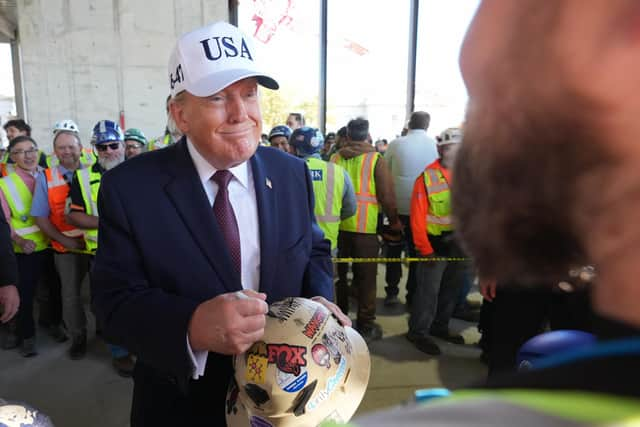

One of the big shocks of the US election was that farmers, traditionally enthusiastic Trump supporters, turned away from him. This saw the Republican party beaten in Kansas, the state central to US agriculture. Trump must be reeling to find that the line from the Wizard of Oz ‘we’re not in Kansas any more’ now applies to his party. Disillusion of Trump among US farmers is not only about the war’s impact on fertiliser and fuel prices. Other policies he has pursued have hit agriculture hard. His clampdown on legal and illegal immigration from countries like Mexico has undermined a traditional source of good, hard working labour on American farms.
This has driven up costs and left farmers struggling to find people willing to work on farms The other big disaster has been tariffs – Trump’s ultimate display of economic incompetence. American farmers were the big losers. Countries responded with tariffs on US exports and this hit grain and oilseed markets.
Farmers in the US Midwest saw other countries, not least the EU and southern hemisphere, taking markets from the US. It was the combination of these events that prompted farmers to desert Trump.
They may still share some of his thinking, but they are no longer willing to be the sacrificial pawns in a political game. The Bank of England has said interest rates depend on what happens over Iran. In theory a newly isolated Trump should be backing down. An expectation this might happen has lowered oil prices, but Trump is anything but predictable.
He never had a strategy for the war with Iran and never defined how a victory would look. He has lost that war; everyone knows that and just wants it settled, not least the key Gulf economies.
But Trump cannot stand the idea of being a loser, even if he now is that politically. He will not opt for peace with Iran unless he is forced into that position. Iran, much as it would like the economic gains from ending the war and having sanctions lifted, will not give Trump any wriggle room to claim he was not defeated. Iran, psychologically, financially and militarily, can afford to play a long game.
Trump can not and the rest of the world needs to find ways to persuade him of that reality. That will not be easy with someone more interested in building a White House ballroom, but it has to happen for the sake of the global economy, the US and the Republican party.
Under most political systems that would be an easy outcome, but not in the US where the president can ignore Congress and the Senate, veto legislation and rule by executive orders. The Trump saga has a few twists and turns to go, which is sad for US democracy and the rest of the world.