
The Chancellor is burrowing for change to shore up fiscal rules
A few decades ago, when cash was king, students were infamous for searching down the back of seats to find some loose change for a night out.
Apocryphal that might be, but now with big spending gaps to fill the Chancellor, Rachel Reeves is doing the equivalent. She is burrowing for loose change to shore up the pretence she can maintain her fiscal rules on borrowing, without cutting public spending.
This is despite a weakening economy and a massive budget gap, estimated at up to £40 billion, to be filled in the autumn. She has already hit farm families with APR and now they could be in the firing line again, with plans to impose higher taxes on “large” properties.
Farmers are a long way off being rich, let alone super-rich, but part of the job is to live in a large rural family home – the classic definition of being asset rich, but cash poor.
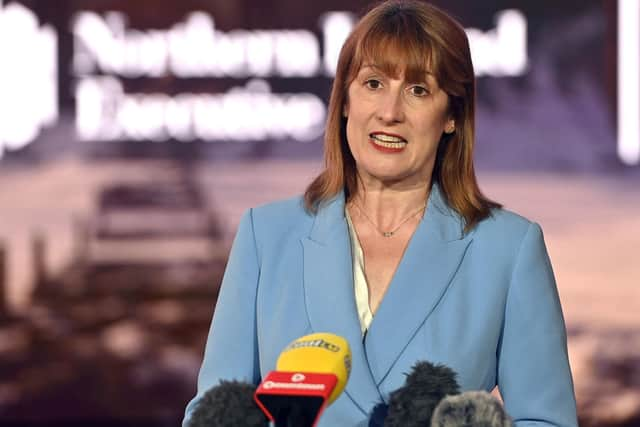

Reeves has no problem targeting what she believes are soft political targets. This reflects an unwillingness to tackle the daily waste in every government department after her boss, Keir Starmer, bottled out on modest cuts in welfare spending to bring the economy back to some degree of balance. This week her problems continued with higher than expected inflation, driven in part by a big surge in food prices. This is a difficult issue for farmers.
They are obviously pleased to see more realistic prices for food, but they walk the tightrope of consumers thinking they are the sole beneficiaries of people having to pay more, particularly for meat.
Food price inflation is a complex issue and it contributes more to overall inflation because of the scale of food purchases across the economy. Everyone has to eat, so where food prices rise they have a disproportionate impact on the overall inflation rate.
They are also a mixture of a tightening market around supply and demand and of factors that are global. Much of the global disruption to food markets began with Russia’s invasion of Ukraine and there are no signs this will be easily solved.
As a result we will continue to live with a broken global situation, with costs on farms still heavily impacted by the loss of Russia as a major supplier of basic inputs, including the stalwarts of fertiliser and energy. Because these are global issues they are affecting every country, but the UK is at the high end of the global inflation rates for food. At 4.9 per cent in June, it is well ahead of the EU’s 3.6 per cent and the United States’ 2.9 per cent.
This, in no small measure, is a reflection of decisions taken by Reeves in her budget last year – the one where she made the disastrous decision to curb agricultural property relief. That budget brought a big increase in employer’s national insurance contributions, to allow her to maintain the fig leaf of a commitment not to raise taxes.
These decisions hit the food processing and retail sector hard and they opted to pass on the impact via higher prices. This confirms that tax rises on businesses are by definition drivers of inflation. On food inflation everyone is talking about the price of beef, but it is welcome news for farmers. The big factor driving prices is old fashioned supply and demand imbalance.
For years, through BSE and beyond, farmers were producing beef at prices that left minimal margins for an enterprise that demanded significant investment and risk. Inevitably they voted with their feet. Here and across the EU the beef herd has been in steady decline for years.
As with all markets there then comes a tipping point, where supply and demand are so out of alignment that prices then begin to rise steeply. What makes livestock farming unique is that decisions are then made to take advantage of good prices by culling breeding stock and replacements, ultimately making the long term supply problem more acute.
In a report on why food prices are rising in the UK, the Economics Observatory suggests the UK beef sector in now in that perfect storm, with production down by five per cent year-on-year and prices up by 17 per cent.
This gap will drive people back into beef, but unlike the pig cycle in agricultural economics of boom and bust this will take time – so the good times for beef farmers should roll for a bit longer.