
Interest in hybrid rye continues to grow
Recent years have seen arable farmers in Northern Ireland growing enhanced acreages of hybrid rye.
And this trend is likely to be maintained in 2026/27.
Boosting the prospects for the cereal is the availability of the Hybrid Rye growing guide, launched by Teagasc earlier this year.
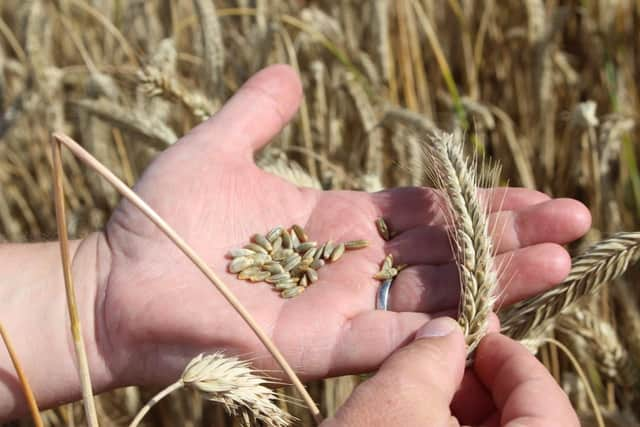

Hybrid rye has a wide sowing window from mid-September through to late autumn. It is a particularly good crop for later sowing as it has a strong tillering capacity, with vigorous early spring growth.
Seed rates should be based on time of drilling, along with seedbed, soil and moisture conditions; the below seed rates are a guide only.
Seed is sold in unit packs of 12 million viable seeds per bag (approximately 0.5T). Sowing early at 200 seeds/m² equates to 2 million seeds/ha meaning a bag sows 6ha.
October sowing at 240 seeds/m² uses 2.4million seeds/ha meaning a bag sows 5ha and late sowing at 260 seeds/m² uses 2.6 million seeds/ha so one bag sows around 4.5ha.
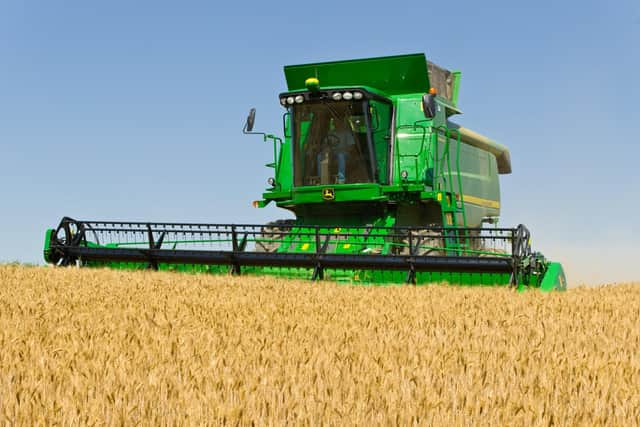
Hybrid rye is an excellent crop for drought-prone or lighter soils, as the crop has a deep root system and is a good scavenger for nutrients and water.
Modern hybrid varieties are shorter and stiffer than older conventional varieties and therefore, with an appropriate PGR programme, are suitable for a far wider range of soil types. Hybrid rye suffers less from eyespot than wheat.
It is also useful in the control of blackgrass because, with much greater height than wheat, far fewer blackgrass seeds are produced (viability is very low). Furthermore, an early July whole crop harvest means the majority of blackgrass seeds will not have shed.
Hybrid rye is a crop with good foliar disease resistance with the exception of brown rust. The vigorous crop growth gives excellent competition for weeds, resulting in much-reduced herbicide use.
Nitrogen levels will be approximately 150 kg/ha in addition to P and K, a single PGR application on lighter soils and usually a maximum of a single fungicide. For heavier land, a robust PGR programme is more appropriate, together with a 2nd or 3rd fungicide in situations of high disease pressure.
Biogas Production
Hybrid rye is an excellent crop to balance other high production substrates, such as beet or maize in the production of biogas in anaerobic digestion plants.
The addition of hybrid rye to beet or maize provides a different nutrient source for the bacteria in the digester.
This has a two-pronged synergistic effect; the hybrid rye increases methane yield due to a better balance of trace elements and a reduction in retention time in the digester.
The usual ratio is 25% rye to 75% maize. Hybrid rye is also an excellent alternative to maize where the geography or soil types are not suitable for maize production. In such situations, hybrid rye and beet would make a good combination.
Hybrid rye gives higher dry matter yields than triticale or wheat particularly on poor soils or in colder conditions.
Triticale
In tandem with all of this, the seed company Goldcrop Goldcrop is highlighting the potential for winter hybrid rye and triticale in Irish tillage rotations.
Both cereal crops options are very suited to the growing conditions that exist across the island of Ireland.
The yield potential of triticale is immense, making it perfectly suited for grain production and wholecrop purposes.
Goldcrop trials have confirmed that the cereal can out yield 5t/ac winter wheat crops by up to 20%. This is based on both cereals being managed with the same level of inputs.
Goldcrop agronomist, John Dunne commented:
“The combination of excellent grain output and straw potential makes triticale a superior wholecrop option for Irish livestock farmers.”
Meanwhile, Irish grower interest in winter hybrid rye continues to grow.
The crop delivers myriad benefits from a performance and rotation related perspective.
It has a high grain yield potential, equivalent to winter wheat at between 10 to13t/ha.
The crop helps deliver a more flexible workload on tillage farms.
Hybrid rye will mature in between winter barley and winter wheat, it also has a wide sowing window from September to December.
What’s more, it can be harvested for wholecrop or for grain. Modern varieties will typically have 50 to 55% grain in total yield and fresh yields of 45 – 50 t/ha @ 30 to 40% DM content.
There is a lower nitrogen (N) requirement to grow the crop than is the case with winter wheat.
Hybrid rye crops will also deliver high straw yields.
The crop requires 25% less water than wheat or barley to fill its grain and this makes rye very suitable for light textured soils.
Rye is second best after oats in terms of take-all tolerance, which makes it an ideal choice as a third or second cereal in a winter rotation.
But it is not a take-all break. So, growers should be aware that only crops like oilseed rape, pulses, oats etc can break the take-all cycle.
Significantly, hybrid rye has a high yield potential, and the fertiliser programme needs to reflect this.
As a rule of thumb, rye will generally require 20 to 30% less N than winter wheat and research has shown that a yield plateau occurs for hybrid rye at approximately 180kg N/ha.
Rye will remove large amounts of potash (K) so this must be replaced: 80 units of K per acre as a minimum.
Crop nutrition
Teagasc research scientist, Dr Richie Hackett, has confirmed a number of priorities when it comes to getting the nutrition of winter rye crops right
The cereal is relatively new Ireland in the modern era, although it was grown in the past.
However, the area of rye planted out in the country has increased steadily over the last number of years: albeit from a low base.
According to the Teagasc tillage specialist, the is reputed to tolerate a wide variation of soil pH values with the range of 6 to 7 should being optimal.
He further explained:
“Rye has been shown to have an extensive and deep root system that is good at scavenging nutrients and water making it a better crop option on poorer, more drought prone or less fertile soils than wheat or barley.
“Its high yield and particularly its high straw yield means that it has a relatively high demand for nutrients.
“The basics of nutrition of the rye crop will be similar to other winter cereals in that nutrient requirements should be based on soil and/or foliar tests and expected offtakes with the overall goal of replacing offtakes of the major nutrients so as to maintain soil levels.”
Research at Oak Park in Co Carlow has indicated that hybrid rye has a higher nitrogen (N) use efficiency than winter wheat, typically requiring 20-25% less fertiliser N than wheat in Index 1 situations.
In addition, there is some evidence that suggests that the difference between wheat and rye may be smaller when sown after a break crop.
This high nitrogen use efficiency coupled with high yields contributes to rye having a low carbon footprint.
Richie Hackett again:
“Rye can move through growth stages earlier than for other crops in the spring and will have a greater demand for N earlier in the season. This might indicate that very early N application, possibly in February, may be required.
However, work at Oak Park indicated very little difference, in terms of grain yield, between applying the first N in late Feb/early March and mid-March on well established crops.
Early N application will encourage a more dense canopy which can exacerbate lodging risk. Crops with low tiller numbers or crops that are being grazed by slugs may benefit from earlier N applications.
Irish trials have confirmed that a two or three split program is suggested with the first, comprising of 25-30% of the total, being applied in early to mid-March and the remainder being applied at around growth stage 31 in late March or early April.
While a third application generally doesn’t give a yield advantage over a two split programme, it can avoid the need to apply a large second application and can also reduces the risk of N loss due to leaching as a result of a large second application followed by unfavourable conditions.
Where a third application is being applied it can be applied at around flag leaf emergence.
For soil N index 1 situations, where no organic manures have been applied, a total of 175 kg N/ha is suggested. On sites with reduced yield potential this can be reduced by 10-20 kg N/ha.
Richie Hackett commented:
“Lower amounts will help reduce any risk of lodging. Rates in excess of 200 kg N/ ha significantly increase the risk of lodging.
“If organic manures are applied, it is essential that the amount of fertiliser N applied is reduced by an amount equivalent to the available N in the manure to reduce the risk of lodging.
“The risk of lodging is likely to be very high where rye is grown in a soil N index 4 situation particularly if the crop is sown early in the autumn.”
Meanwhile, organic manures can be a useful and cost effective source of nutrients. Organic manures with high proportions of available N such as slurries, poultry manures or digestate should be applied in the spring to maximise the use of the nutrient in these products.
There is no Irish research available to date on the phosphorous, potash and sulphur requirements of rye.
Phosphorus offtakes will be similar to other cereals in terms of kg of phosphorous per tonne of grain yield.
Given its high straw yield, potassium offtakes are likely to be higher than for winter wheat or barley.
But there is conflicting evidence from abroad as to the concentration of potash in the straw. In the absence of Irish data, similar potassium inputs to winter oats are suggested.
The sulphur requirements of rye crops are similar to other cereals and 15-20 kg of sulphur per hectare is advised.
Trace element inputs should be based on soil tests and known deficiencies and appropriate foliar or soil applications made accordingly.